


Page 61 - HTML5
P. 61
Chapter 10: Div Element


        Introduction


        The div element in HTML is a container element that encapsulates other elements and can be
        used to group and separate parts of a webpage. A div by itself does not inherently represent
        anything but is a powerful tool in web design. This topic covers the purpose and applications of the
        div element.


        Syntax


            •  <div>example div</div>


        Examples


        Nesting


        It is a common practice to place multiple <div> inside another <div>. This is usually referred to as
        "nesting" elements and allows for further dividing elements into subsections or aid developers with
        CSS styling.


        The <div class="outer-div"> is used to group together two <div class="inner-div"> elements; each
        containing a <p> element.


         <div class="outer-div">
           <div class="inner-div">
             <p>This is a paragraph</p>
           </div>
           <div class="inner-div">
             <p>This is another paragraph</p>
           </div>
         </div>


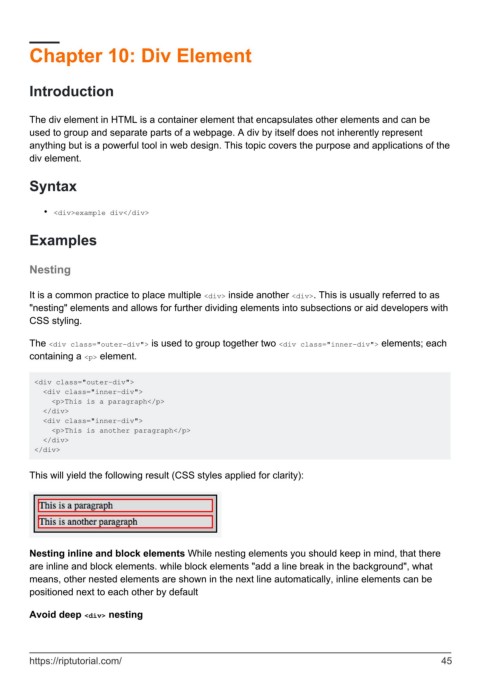
        This will yield the following result (CSS styles applied for clarity):


        Nesting inline and block elements While nesting elements you should keep in mind, that there
        are inline and block elements. while block elements "add a line break in the background", what
        means, other nested elements are shown in the next line automatically, inline elements can be
        positioned next to each other by default


        Avoid deep <div> nesting


        https://riptutorial.com/                                                                               45

